Houdini Power Air vs Patagonia R1 Air: Active Insulation Head-to-Head
Houdini no longer sells the Power Air Houdi. It has left the brand’s store and does not appear in its archive. Its closest current equivalent is the Aero Houdi, a full-zip hoody in a Polartec knit that Houdini calls Power Air Light. Houdini does not present the Aero as the Power Air Houdi’s successor, but of its current hoodies it is the only straight air-knit fleece. The Power Houdi and Power Up Houdi use Polartec Power Stretch Pro, the Moonwalk Houdi II pairs Power Air with a wind-resistant ripstop, and the Mono Air Houdi has moved to the archive.
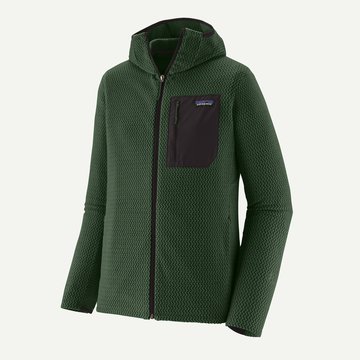
Patagonia’s R1 Air Full-Zip Hoody is still current. Earlier versions of this page got it wrong on two counts: it does not use Polartec Power Air, and it weighs far more than the 227 g quoted. The two hoodies therefore take different routes to the same goal, warmth that breathes during steady effort.
Houdini Aero Houdi
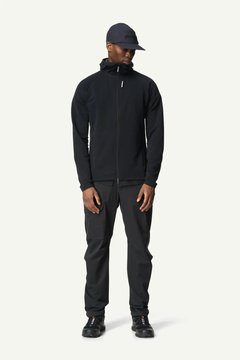
The Aero Houdi (houdinisportswear.com) uses a 255 g/m² knit that traps lofted filament fibers in small pockets. Houdini says it sheds 80% less microfiber than conventional fleece, and that the rebuilt fabric is lighter, stretchier, softer, faster drying and warmer than the previous version. The blend is 52% recycled polyester and 48% elastomultiester, 76% recycled content in total. The garment is designed to be recycled: Houdini takes it back at its shops and at retailers with a Houdini recycling unit.
The cut is fitted, with 4-way stretch and articulated sleeves. A two-way zip runs the full length of the front. Storage is zipped hand pockets plus a zipped chest pocket, and the hem adjusts. Houdini describes the hood as well fitted but does not say whether it goes under a helmet. The fabric is bluesign certified and made in China; the garment is sewn in Vietnam.
Houdini lists 500 g for a men’s large, slightly more than the 480 g it lists for the Power Stretch Pro Power Houdi. The Aero Houdi costs SEK 2,200, €220 or $220 direct from Houdini.
Patagonia R1 Air Full-Zip Hoody
Patagonia’s R1 line has a long history as a technical midlayer platform. The R1 Air Full-Zip Hoody (patagonia.com) uses a 5.7-oz, 100% recycled polyester jacquard fleece with hollow-core yarns in a zigzag knit, which Patagonia says increases airflow and cuts bulk. Patagonia revised it for fall 2025 (style 40256), changing the fit and enlarging the chest pocket to take a phone. The fabric is bluesign approved, and the hoody is sewn in a Fair Trade Certified factory in Sri Lanka.
Patagonia lists an average weight of 369 g (13 oz) without naming a size, according to the listing at authorized dealer Patagonia Bend. OutdoorGearLab measured 352 g in a men’s medium and named the R1 Air its Best Overall Fleece Jacket in a review dated 30 September 2026 (outdoorgearlab.com). It costs $199.
Patagonia calls the fit slim, but reviewers of the 2025 version disagree. OutdoorGearLab describes a relaxed cut and BetterTrail (November 2025) a regular fit that is loose at the hem, while Switchback Travel’s review, updated December 2025, still calls it trim (switchbacktravel.com). The scuba-style hood fits under a climbing or ski helmet, and Patagonia says the off-shoulder seams sit comfortably under pack straps. The reviews also list trade-offs. OutdoorGearLab notes no hood or hem adjustment, quick pilling and a tendency to run warm on steep climbs. Switchback finds the hand pockets too low to clear a hipbelt or harness. Patagonia handles repairs and resale through Worn Wear.
Direct Comparison
The two hoodies differ in fabric as well as execution.
Weight: Houdini lists 500 g for a men’s large. Patagonia lists 369 g on average, and OutdoorGearLab weighed a men’s medium at 352 g. The sizes do not match exactly, but a gap of roughly 130 g favors Patagonia.
Fabric and fit: The Aero Houdi’s encapsulated knit is built to limit shedding and stretches in four directions. The R1 Air’s hollow-core jacquard is built for airflow, and reviewers disagree on whether its 2025 cut is trim or relaxed.
Pockets and adjustment: Both have zipped hand pockets and a zipped chest pocket. Only the Aero Houdi has an adjustable hem. Only the R1 Air’s hood is described as fitting under a helmet.
Materials and end of life: The R1 Air’s fabric is 100% recycled polyester, bluesign approved and Fair Trade sewn. The Aero Houdi is 76% recycled, bluesign certified and designed to go back into Houdini’s recycling stream.
Price: $199 for the R1 Air and $220 for the Aero Houdi. In Europe, Houdini charges €220.
Availability: Patagonia sells through its own stores and retailers such as REI. Houdini sells direct through regional stores (SEK, EUR, NOK, USD and CAD) and through its retail partners.
Closing
The Power Air Houdi is no longer an option. Against Houdini’s closest current hoody, the Patagonia R1 Air Full-Zip Hoody is the more practical active layer on the published numbers: lighter, cheaper, made from 100% recycled fabric and helmet-compatible. The Houdini Aero Houdi suits buyers who want a fitted, stretchy piece with an adjustable hem and a take-back route at end of life, and who will accept the extra weight.