Norrøna Falketind vs Arc’teryx Beta AR: Rain Shell Comparison
Two shells. Both target alpine and technical trail use. Both are three-layer Gore-Tex with zippered underarm vents and helmet-compatible hoods. The differences sit in laminate tier, cut, weight and price. This comparison uses manufacturer-published data from Norrøna and Arc’teryx, with prices as of October 2026.
Laminate: ePE GORE-TEX vs GORE-TEX PRO ePE
Both jackets now use Gore’s ePE membrane. The Falketind runs standard GORE-TEX: a light three-layer fabric with a 30-denier recycled-nylon face and backer, 101 g/m². The Beta AR uses GORE-TEX PRO ePE, Gore’s top tier, in two weights: 100-denier on the yoke and upper arms, 80-denier on the body. The denier difference matters on rock and with pack contact. For moderate rain walks or approach hiking, standard GORE-TEX is sufficient. For routes where the shell takes real abrasion, Pro is the more appropriate laminate.
Norrøna publishes 28,000 mm of waterproofness and a RET under 13 for the Falketind. Arc’teryx’s Guest Services, answering on the product page, gives the same 28,000 mm for the Beta AR but does not publish a RET, so a number-to-number breathability comparison is not possible.
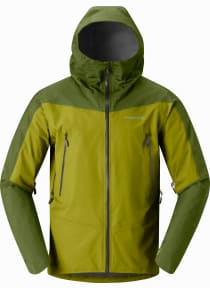
Norrøna Falketind Gore-Tex Jacket
The Falketind is the lighter shell at 356 g, per Norrøna’s product page, about 104 g under the Beta AR. That saving is meaningful over a long day. The current version has been on sale since September 2024. Norrøna calls it its most versatile waterproof jacket, made for all-year mountaineering and also pitched at trekking and ski touring.
Venting comes from long underarm vents with two-way zippers. When output spikes on a steep approach, they shed heat without stopping to remove and stow the jacket, and without cracking the front zip and losing chest coverage.
Pockets are mid-mounted. WearTesters (2024) describes zippered hand pockets positioned to work with a backpack or waistpack, plus a hidden inner pocket.
The hood is helmet-compatible with one-hand adjustment, and the asymmetric cuffs close with Velcro. The cut is what Norrøna calls technical: a Y-cut with articulated arms. WearTesters describes it as slim through the body with room for insulating layers, and long in the body and sleeves.
On Norrøna’s own store the Falketind is US$599, €549 or £500.
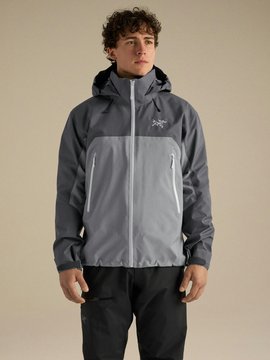
Arc’teryx Beta AR Jacket
The Beta AR weighs 460 g per Arc’teryx’s product listing. It is the heavier jacket by 104 g; the extra weight buys heavier face fabrics and the Pro laminate. The current GORE-TEX PRO ePE version went on sale on 31 July 2025 and weighs effectively the same as its predecessor, which Gear Patrol (2025) puts at 461 g.
Venting is via pit zips. An earlier version of this page said the Beta AR had none; Arc’teryx lists pit zippers, so both jackets have zippered underarm vents.
The pocket layout is two zippered hand pockets and an internal chest pocket. Gear Patrol calls the pockets pack-friendly.
The hood is a helmet-compatible DropHood with a precision adjustment system and internal cordlocks. Arc’teryx says it gives full coverage without impacting peripheral vision. A RECCO reflector is built into the brim, and the cuffs use glove-friendly Velcro tabs.
The Beta AR is US$650, €650 or £600 on Arc’teryx’s own store. In the US that is $50 more than the previous version.
Movement and Cut
The two brands describe their fits differently. Arc’teryx calls the Beta AR a Regular fit, cut comfortably through the chest, waist and hip to layer over or under its other pieces, with articulated patterning for mobility. Norrøna calls the Falketind a technical fit with a Y-cut and articulated arms. Neither is designed as a standalone casual shell. Both assume activity use.
For sustained climbing and routes with heavy pack contact, the Beta AR’s heavier fabric is purpose-matched. For high-output aerobic activity, the Falketind’s lower weight is the more relevant feature. Venting does not separate them; both have zippered underarm vents.
Closing
These are not interchangeable jackets despite occupying the same category. The choice depends on use pattern. High-output ski touring or fast hiking where weight and price matter: the Falketind is the better fit. Technical alpine climbing or mixed-weather mountaineering where laminate durability matters more: the Beta AR is the appropriate tool. The laminate tier difference, standard ePE GORE-TEX versus GORE-TEX PRO ePE, is a real performance gap under hard use, not a marketing distinction.